Climate Change

  • |

    Victor Joecks Errs Again

    Victor Joecks posted a column in the Las Vegas Review-Journal today: Las Vegas heat wave shows futility of fighting the weather

    This post outlines the factual errors and mischaracterizations in the op-ed for use in follow-up discussions or oral arguments.  I’ll bypass the easy target of attacking Victor Joecks ad hominem by pointing out and linking to contradictions in his past editorials, in which he denied climate change and dismissed the alarmism he now suggests we should accept. The blatant hypocrisy of those positions, in my opinion, weakens his credibility.  That said, let me engage as if he is making the arguments in good faith.

  • Scientists Surprised by Warmest January on Record Amid La Niña Condition

    TLDR: Key Points

    • January 2025 broke records as the warmest January globally, surprising scientists due to La Niña cooling patterns .
    • Other significant factors beyond carbon emissions, such as reduced sulfate pollution, are accelerating warming .
    • Arctic sea ice hit record lows, contributing to evidence of climate instability .
    • Experts cast doubt on the attainability of U.N. climate goals without unprecedented breakthroughs or changes in approach .
  • Research: Property Prices Imperiled $1.5 Trillion by Climate Change

    A comprehensive analysis by First Street, published today in its 12th National Report, Property Prices in Peril, provides critical insights into the observed and projected effects of climate change on the U.S. real estate market. Utilizing new peer-reviewed methodologies1 and macroeconomic modeling, the report estimates a potential $1.47 trillion reduction in unadjusted real estate value over the next 30 years due to climate-related risks.

    Drawing on interdisciplinary research that examines climate risk awareness, housing market dynamics, climate migration patterns, and demographic and socioeconomic shifts, the study offers a forward-looking analysis of the Housing Price Index (HPI), property valuation trends, and localized Gross Domestic Product (GDP) impacts extending to 2055.

  • |

    An Example: One property owner reacts to climate change

    Editor’s Note: climate change changes economic incentives, which change all sorts of things.  Here, a major land owner in Florida exits raising oranges and will use the land for real estate development and other uses because “we must now reluctantly adapt to changing environmental and economic realities. Our citrus production has declined 73% over the last ten years, despite significant investments in land, trees and citrus disease treatments. The impact of Hurricanes Irma in 2017, Ian in 2022 and Milton in 2024 on our trees, already weakened from years of citrus greening disease, has led Alico to conclude that growing citrus is no longer economically viable for us in Florida,” said John Kiernan, Alico’s President and CEO.”

  • Permafrost begins to melt; carbon sink now a carbon source?

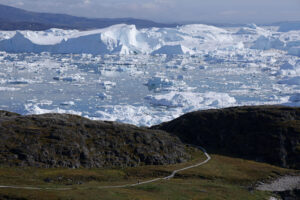
    WASHINGTON—The icy region at the top of the globe, lashed by wildfire and pelted with increasingly heavy precipitation, has tipped into “uncharted territory,” scientists reported Tuesday.

    The Arctic tundra has shifted from storing carbon in the soil to becoming a carbon dioxide source, the National Oceanic and Atmospheric Administration (NOAA) and its partner researchers concluded in their 19th annual Arctic Report Card.

    As a result, the Arctic’s ability to help regulate Earth’s temperature is significantly compromised. Emissions from warming permafrost regions must be thought of as an increasing risk to a planet already being transformed by the overburden of fossil fuel pollution

  • CCL’s Dana Nuccetelli comments on alarming peer-reviewed warning

    Earth’s climate in 2024 is “in a major crisis with worse to come if we continue with business as usual,” a team of 14 climate scientists warned in “The 2024 state of the climate report: Perilous times on planet Earth.” The report did not sugarcoat their view of the dangers humanity is facing.

    “We are on the brink of an irreversible climate disaster,” the report begins. “This is a global emergency beyond any doubt. Much of the very fabric of life on Earth is imperiled. We are stepping into a critical and unpredictable new phase of the climate crisis.”

    That said, Nuccitelli says “The state of the climate is currently perilous, but humanity still has every opportunity to reduce the level of peril.”

  • UN Climate Chief Warns of Looming ‘Trainwreck’ as 1.5C in Doubt

    The world is on course to miss a target for cutting emissions this decade by an overwhelming amount, new UN analysis shows, meaning more dangerous global warming is likely.

    Total emissions of CO2 into the atmosphere in 2030 will only be 2.6% lower than in 2019, according to the latest climate plans put forward by countries, a synthesis compiled by UN Climate Change said Monday. To be consistent with a goal for a 1.5C warming limit, the Intergovernmental Panel on Climate Change suggest that emissions would have to fall by 43% over the same time period.

    The best estimate of where temperatures will peak this century, based off the national climate plans, is between 2.1C-2.8C, the institution said. Still there’s a possibility that emissions could peak this decade.

  • The U.N.’s Verdict: No Decline This Year in GHG emissions

    An annual assessment by the world body tracks the gulf between what countries have vowed to do and what they’ve actually achieved. One year after world leaders made a landmark promise to move away from fossil fuels, countries have essentially made no progress in cutting emissions and tackling global warming, according to a United Nations report issued on Thursday.

    Global greenhouse gas emissions soared to a record 57 gigatons last year and are not on track to decline much, if at all, this decade, the report found. Collectively, nations have been so slow to curtail their use of oil, gas and coal that it now looks unlikely that countries will be able to limit global warming to the levels they agreed to under the 2015 Paris climate agreement.

  • UN says world is now on course for warming of up to 3.1 °C

    Editor’s Note: “Business as usual” won’t keep us below 2.0°C.  We MUST keep working to “bend the curve” … and drive greenhouse gas emissions down 50% by 2030 and to net-zero by 2050.

    Take heart, the “business as usual” prediction from The Fifth Assessment Report of the IPCC (2014) was worse: “If no new policies are implemented to mitigate climate change, the report projected an increase in global mean temperature of approximately 3.7°C to 4.8°C above pre-industrial levels by 2100.”  The Paris Agreement in 2015 started the process.  WE HAVE MORE WORK TO DO!  #permitting_reform #carbon_pricing

  • Climate Week in NYC Addresses Economic Impacts

    EcoTech Note:  Climate Week is a series of high-level international meetings that take place during the same week that the U.N. General Assembly meetings.  It’s one of the two or three other high-level confabs that matter most (the others being the annual “Conference of the Parties” to the Paris Agreement and maybe Davos.

    This article summarizes some of the more important talks and reports given so far this week, with elements of the EcoTech Synthesis highlighted in yellow.

     – – – – – – – – – – – – –

  • Methane emissions are rising faster than ever

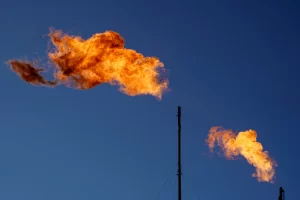
    Emissions of methane — a powerful greenhouse gas — are rising at the fastest rate in recorded history, scientists said Tuesday, defying global pledges to limit the gas and putting the Earth on a path toward perilous temperature rise.

    New research from the Global Carbon Project — an international coalition of scientists that seeks to quantify planet-warming emissions — finds that methane levels in the atmosphere are tracking those projected by the worst-case climate scenarios. Because methane traps about 30 times more heat than carbon dioxide over a 100-year time frame, the accelerating emissions will make it nearly impossible for the world to meet its climate goals, the authors warned.

    “These extra methane emissions bring the temperature thresholds ever closer,” said Rob Jackson, a Stanford University climate scientist and chair of the Global Carbon Project. “Warming that was once inconceivable is now perhaps likely.”

  • Here’s what the hottest summer on Earth looked like

    EcoTech Note:  This is a reminder that while our advocacy work must sustain over the long run, it DOES constitute an emergency.  Contrary to claims from climate skeptics that advocates are alarmist, it appears predictive models underestimated how fast-bad climate change, would get.


    Global temperatures between June and August were 1.5 degrees Celsius (2.7 degrees Fahrenheit) above the preindustrial average, the Copernicus Climate Change Service said Friday — just edging out the previous record set last summer. The sweltering season reached its apex in late July, when Copernicus’s sophisticated temperature analysis program detected the four hottest days ever recorded.

    Meanwhile, temperatures for the year to date have far exceeded anything seen in the agency’s more than 80 years of recordkeeping, making it all but certain that 2024 will be the hottest year known to science.