CCL Made A Bad Bill Better
A short presentation to the CCL-Las Vegas meeting on Saturday outlined CCL’s role in reducing the damage from the OBBBA. Downloadable copies of slides and printout here. Video is here. Here is the printout of…
Despite federal government opposition, new analyses show that green energy installations continue to grow, with projections indicating renewables will become the leading U.S. power source by the 2030s, though emissions are now expected to fall only 16% by 2035 compared to the previously predicted 24%.
Western governors of both parties are greeting the incoming second Trump administration with calls for “all of the above” energy development, even as they urged national Republicans to preserve some of the Biden administration’s energy policies. Democratic and Republican members of the Western Governors’ Association — which covers the 22 westernmost states and territories, including some of the top-producing states for fossil fuels and renewables — approved five policy resolutions this week at their annual winter meeting in Las Vegas. The WGA’s energy policy resolution called for permitting reform, more aggressive forest management — including more prescribed burns — and sustained investment in the electricity grid.
Editor’s Note: Nevada has one operating lithium mine and another one (Thacker Pass) in development. This will be the third. See Primer: Lithium Mining in Nevada
The United States’ Bureau of Land Management (BLM) on Thursday approved Ioneer’s (ASX: INR) Rhyolite Ridge lithium-boron project in southwest Nevada, opening the door for closing $1.19 billion in funding.
Ioneer can now access a $700 million loan from the US Department of Energy (DOE) and a $490 million equity investment from Sibanye Stillwater
The Sydney, Australia-based Ioneer aims to finalize its financing agreements for the $785 million project before year-end. However, legal battles, regulatory adjustments, and political uncertainty remain obstacles as the company pushes toward construction, CEO Bernard Rowe said on a late Thursday webcast.
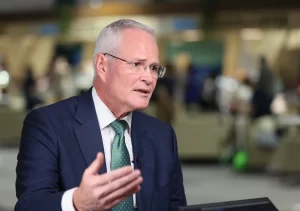
Darren Woods, the chief executive of Exxon Mobil, cautioned President-elect Donald J. Trump on Tuesday against withdrawing from the Paris agreement to curb climate-warming emissions, saying Mr. Trump risked leaving a void at the negotiating table.
Mr. Woods, speaking at an annual U.N. climate summit in Baku, Azerbaijan, described climate negotiations as opportunities for Mr. Trump to pursue common-sense policymaking.
“We need a global system for managing global emissions,” Mr. Woods said in an interview with The New York Times in Baku. “Trump and his administrations have talked about coming back into government and bringing common sense back into government. I think he could take the same approach in this space.”

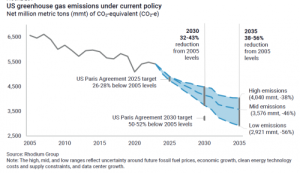
Rhodium Group has a new report out, Taking Stock 2024: US Energy and Emissions Outlook. Consistent with other analyses, they anticipate that US climate pollution will reach 32–43% below 2005 levels by 2030 based on current policies. Rhodium concludes:
“Developers face challenges with long interconnection queues, increasing local opposition to installations, onerous siting and permitting processes, lack of sufficient transmission capacity, continued supply chain constraints, and inflation … [rapid clean energy deployment] will not happen without additional policy action to overcome the non-cost barriers facing clean electricity deployment today, such as siting and permitting, interconnection, and supply chain challenges.”
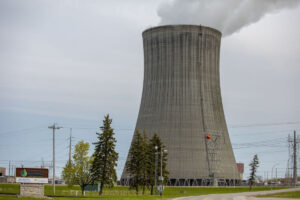
After more than a year of negotiations, Congress approved the ADVANCE Act (Accelerating Deployment of Versatile, Advanced Nuclear for Clean Energy) yesterday, and sent it to President Biden for signature.
The bill will give the Nuclear Regulatory Commission more flexibility to hire the staff it needs for a vastly increased pace of license applications. It will reduce fees for some applicants, require more timely processing of applications, facilitate licensing at retiring coal plants, and require work by the NRC to facilitate the export of advanced reactor technology.
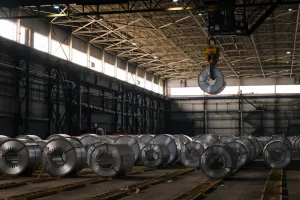
The industrial sector is responsible for over 25% of greenhouse gas emissions in the US. The 33 projects funded here might demonstrate viable fast pathways to decarbonize these notoriously hard-to-decarbonize sector: cement, alumninum, steel, pastics and a broad range of industrial processes that require heat and sometimes chemistries that create CO2 directly.
When the Inflation Reduction Act was becoming law in 2022, some of the country’s leading energy researchers predicted a cut of 37 percent to 42 percent by 2030 compared to the level in 2005, in line with the Biden administration’s stated goal of reducing emissions by 40 percent by 2030. So how are things going 18 months after President Biden signed the IRA? And why?
from Canary Media By Jesse D. Jenkins This guest essay was updated on Dec. 22, 2023. It’s not often you get to write the rules to govern an entirely new industry. But that’s exactly what the Biden…
Unlike his 2015 environmental encyclical, Laudato Si’, in which he scolded climate “deniers” and called for an “ecological conversion” among the faithful, the new document seeks to influence the next U.N. Climate Change Conference
It specifically calls on the United States and other wealthy countries to do more to help poor nations, which have contributed least to the climate crisis, before the COP28 talks in Dubai next month.
By that test, the IRA passes with flying colors, according to an innovative new study by the Rhodium Group. Over the course of many decades, it finds that “for every ton of CO2 reduced within the US, an additional 2.4-2.9 tons of CO2 emissions reductions are achieved outside the US, thanks to IRA-driven cost reductions in the “green premium” of [emerging climate technologies] globally.”